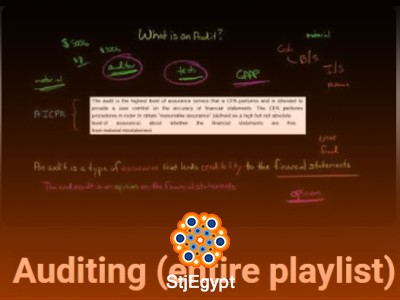

This auditing full course for beginners provides a clear and structured introduction to the fundamentals of auditing and its role in financial reporting and business accountability. It is designed for students, accounting beginners, and professionals who want to understand auditing concepts step by step.
The course begins by explaining what an audit is and why auditing is important for organizations, investors, and regulators. It then introduces key concepts such as assurance, attestation, and the role of auditors in verifying financial statements.
Learners explore different types of audit opinions, including unqualified, qualified, adverse, and disclaimer opinions, along with the concept of going concern. The course also explains the difference between internal and external auditing, highlighting their roles within organizations.
A key section focuses on auditing standards, including the differences between PCAOB and AICPA standards, and how regulations like the Sarbanes-Oxley Act impact auditing practices.
The course also covers governance topics such as the audit committee and its responsibilities in ensuring transparency and compliance.
Finally, learners go through the full audit process, including client acceptance, planning, execution, and reporting, providing a complete understanding of how audits are conducted in real-world scenarios.
By the end of the course, learners will have a solid foundation in auditing principles, standards, and processes used in modern accounting and finance.